A well-organized home is not about having more cabinets. It is about making every inch work harder. Smart storage reduces daily stress, saves time, and helps every family member find what they need without searching through clutter.
Start with the Areas You Use Every Day
Before buying storage products, identify the spaces that create the most clutter. For most households, these include:
Entryways
Kitchens
Living rooms
Bathrooms
Bedrooms
Focus on one area at a time. Small improvements are easier to complete and maintain than a whole-home organization project.
Maximize Every Inch of Available Space
Many homes have unused storage opportunities hiding in plain sight. Look above doors, beneath beds, behind cabinet doors, and inside empty corners.
Practical solutions include:
Wall-mounted shelves instead of floor-standing units
Shelves above doors for seasonal items
Low-profile containers beneath beds
Hooks and racks inside cabinet doors
Rotating shelves for difficult corners
Vertical storage increases capacity without taking up valuable floor space or making a room feel crowded.
Choose Storage That Serves More Than One Purpose
Furniture can provide more than seating, dining, or sleeping space. Multipurpose pieces reduce visible clutter while keeping everyday items close at hand.
Useful options include:
Storage benches in entryways
Ottomans with removable or lift-up tops
Beds with built-in drawers
Dining benches with hidden compartments
Lift-top coffee tables for electronics, books, or blankets
Before purchasing a piece, check its internal dimensions. A storage bench may look spacious but offer limited usable capacity once hinges and supports are taken into account.
Organize Around Daily Habits
Instead of organizing by room alone, create storage zones around the way your household actually functions.
Dedicated zones may include:
School supplies and paperwork
Pet accessories
Device-charging equipment
Sports gear
Cleaning products
Seasonal decorations
Keeping related items together reduces searching and makes cleanup faster. Store frequently used belongings between waist and eye level. Reserve high shelves and less accessible spaces for seasonal or rarely used items.
Make the Kitchen More Efficient
The kitchen often contains the highest concentration of frequently used items. Small organizational upgrades can make meal preparation and cleanup noticeably easier.
Use drawer dividers for utensils and tools.
Add pull-out shelves to deep cabinets.
Store food in stackable containers.
Use rotating organizers in corner cabinets.
Add vertical dividers for trays, pans, and cutting boards.
Keep everyday dishes, cookware, and ingredients close to the areas where they are used. This reduces unnecessary movement and improves kitchen workflow.
Improve Closet Functionality
Most closets do not use their full height or depth effectively. A few adjustable components can significantly increase usable storage.
Install double hanging rods for shorter garments.
Add adjustable shelves for changing needs.
Use shelf dividers to keep folded items upright.
Place hanging organizers on doors or rods.
Store seasonal clothing in clearly labeled containers.
Measure shelves, rods, and door clearances before purchasing organizers. Standard products may not fit narrow or unusually shaped closets.
Create Simple Family Organization Systems
Even the best storage system will fail if it is too complicated to follow. Make every category easy to identify and every item easy to return.
Label bins and baskets clearly.
Give each family member a personal storage zone.
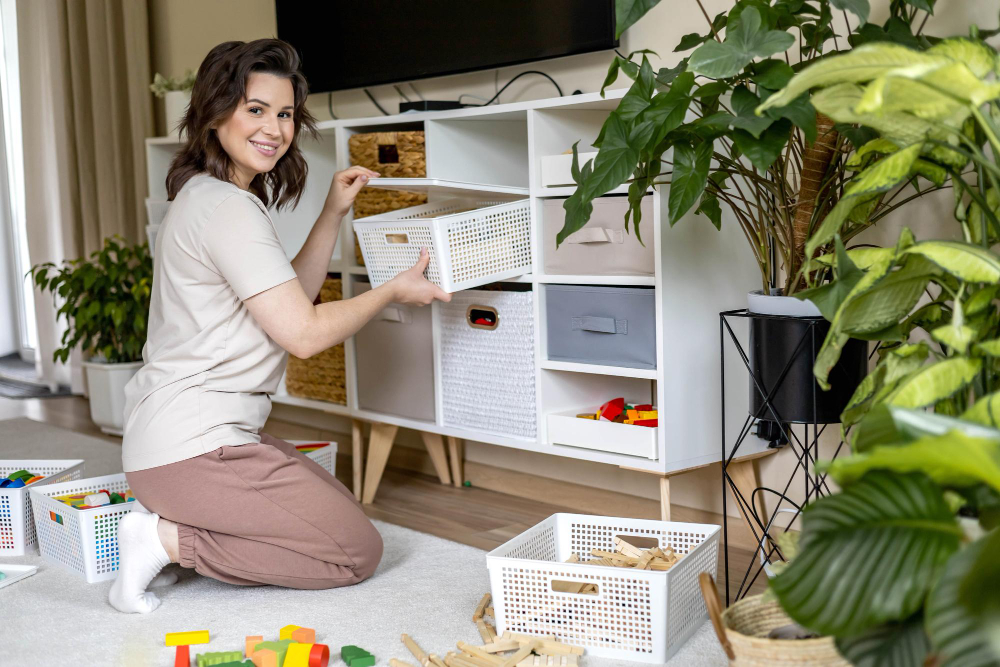
Place children’s storage within easy reach.
Keep frequently used items visible or accessible.
Complete a short household reset each evening.
A ten-minute daily cleanup is usually more manageable than allowing clutter to build up for an entire week.
Maintain the System
Organization is an ongoing process. Review storage areas every few months and adjust them as your household changes.
✓ Donate items that are no longer used.
✓ Replace broken containers or hardware.
✓ Reorganize high-traffic areas.
✓ Rotate seasonal belongings.
✓ Remove duplicate household items.
Avoid buying new organizers until you have removed unnecessary belongings. Adding more containers without reducing clutter often creates a larger, more complicated storage problem.
Keep Storage Flexible
Your family’s needs will change over time. Adjustable shelving, modular cabinets, movable dividers, and stackable containers can adapt as children grow, hobbies change, or rooms take on new purposes.
Flexible storage usually lasts longer and reduces the need for expensive replacements.
A Better Organized Home Starts Small
Smart storage is not about buying the greatest number of organizers. It is about creating simple systems that support everyday routines.
Start with one high-traffic area, use vertical space, choose multipurpose furniture, and keep frequently used items accessible. These practical changes can lead to cleaner rooms, faster routines, and a home that feels easier to manage every day.